When you’re NHS frontline, “coping” can become the default
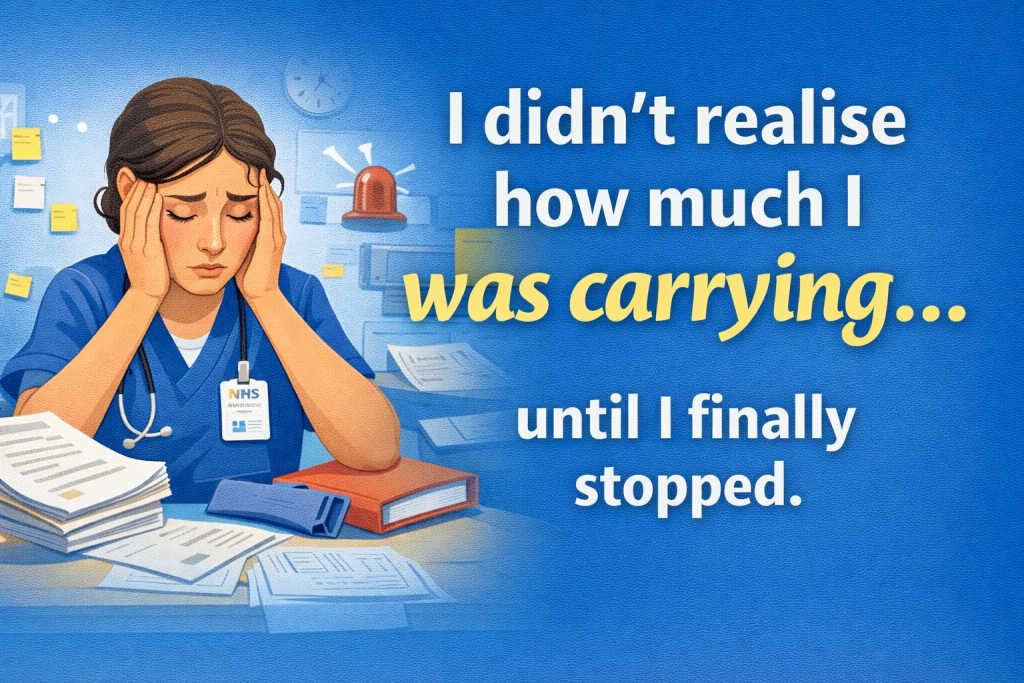
Whether you’re a frontline clinician, nurse manager, clinical lead, or senior nurse, you’re expected to:
- keep standards high while the system feels stretched
- manage complexity without enough space to think
- lead people through pressure, conflict, and change
- carry responsibility quietly, because “that’s the job”
- stay compassionate while running low yourself
So it makes complete sense that you’re searching for something that helps.
Not another training module.
Not another “be resilient” message.
Not something that makes you feel like the problem.
Something practical, human, and effective.
Because the truth is: you don’t need fixing.
You need support that helps you feel steady again.
The hidden cost of doing nothing
Most people don’t crash. They drift.
And the drift looks like this:
- you’re doing the job, but it takes more effort than it used to
- you feel emotionally flatter, or constantly wired
- your confidence takes quiet knocks (even when you’re performing well)
- you overthink decisions, replay conversations, doubt yourself
- you give everything at work, then have little left for home
- you stop making time for what restores you because you’re “too tired”
The biggest cost isn’t just stress.
It’s when you start believing this version of you is permanent.
It isn’t.
But doing nothing has momentum.
And over time, that momentum can lead to burnout, compassion fatigue, strained relationships, poor sleep, reduced performance, increased sickness absence, or simply losing your sense of who you are outside the role.
A different way forward: calm confidence, without burning out
Empowering NHS Frontline Staff to build calm confidence, protect their wellbeing, and stay effective without burning out.
This isn’t therapy. And it isn’t “positive thinking”.
It’s coaching that helps you get underneath the surface patterns that keep repeating, such as:
- carrying everything alone
- pushing through when you need to pause
- people-pleasing, perfectionism, or over-responsibility
- snapping, shutting down, or running on adrenaline
- feeling stuck in “coping mode”
- losing confidence in your own voice
The goal is simple:
To help you feel more clear, capable, and emotionally steady.
So you can lead, communicate, and perform without it costing you your wellbeing.